
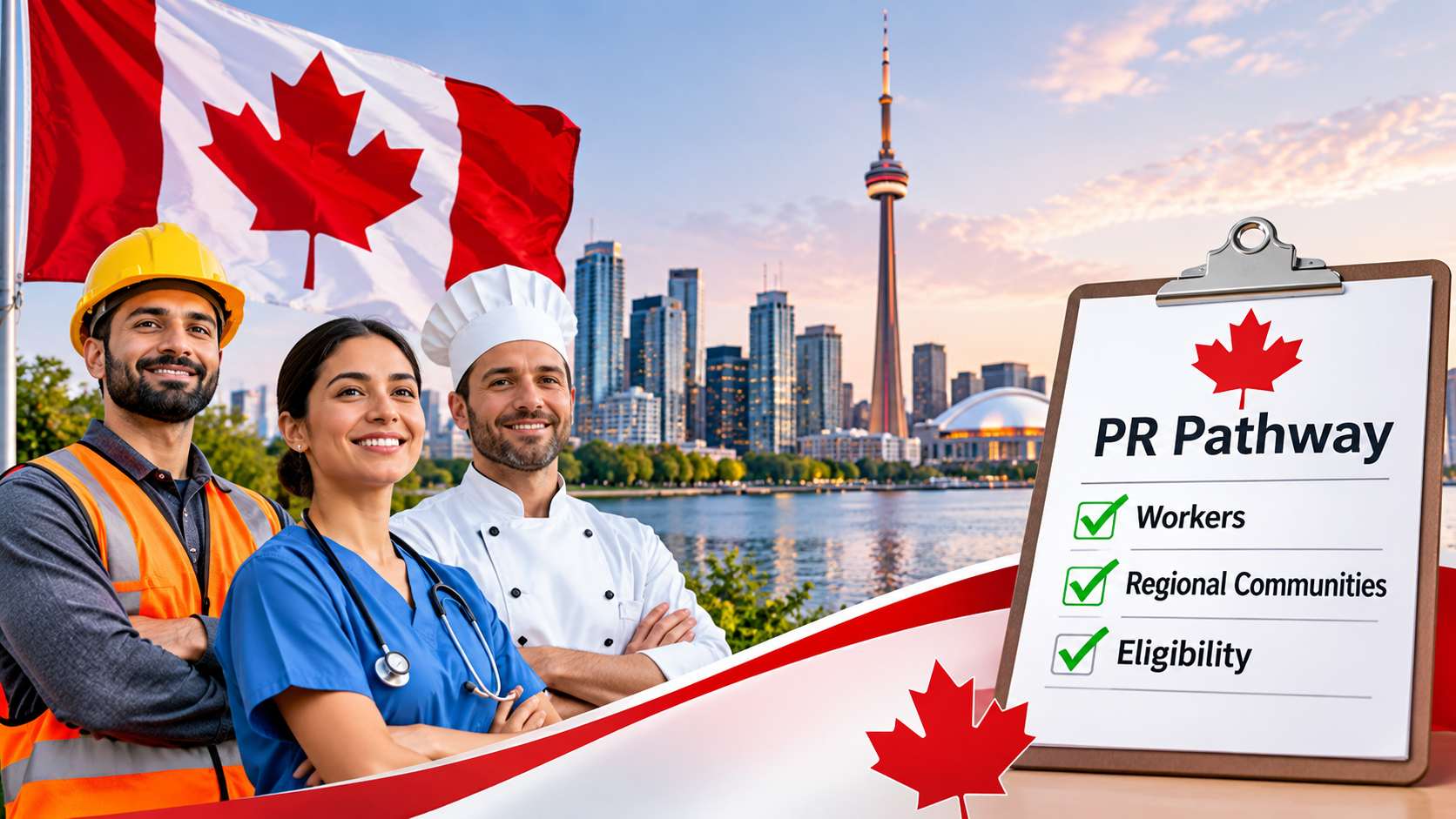
Canada’s federal government has formally launched a major new permanent residence pathway project focused at the transition of eligible workers already settled in regions across the country. This is a targeted approach that supports regional economic growth and stabilizes local labor markets, and is part of a broader plan by Immigration, Refugees and Citizenship Canada (IRCC) to retain qualified personnel.
We at Swift Immigration Solutions closely monitor these major federal policy changes to help candidates and employers smoothly transition to permanent residency.
Overview of New Permanent Residence Pathways
As part of Canada’s new immigration procedure, the federal government has announced committed capacity to process up to 100,000 workers and their qualifying family members who are currently living in participating regional and rural communities.
The main pillars of this roll out are:
Targeted Regional Integration: A heavy emphasis on those individuals with bona fide employment offers that are addressing labor needs in the participating local municipalities and provinces.
- Spouses and families: Eligible workers may be able to get open work visa options for their spouses or common-law partners if they are employed inside the targeted region.
- Accelerated processing capabilities:Designed to tackle application backlogs and convert temporary residents who are currently part of Canada’s workforce.
Focus by Region & Communities Involved
The initiative is designed to support certain regional economies that are contending with ongoing demographic and workforce issues. Areas included, include several provinces, such as:
- Ontario:Thunder Bay, Sault Ste. Marie, Sudbury, North Bay, Timmins Marie and Thunder Bay.
- Western Canada & Prairies:Communities across Manitoba (Steinbach, Altona/Rhineland, Brandon), Saskatchewan (Moose Jaw), Alberta (Claresholm), and British Columbia (West Kootenay, North Okanagan-Shuswap, Peace Liard).
- Atlantic Canada:Pictou County in Nova Scotia.
How to Get Ready for Regional & In-Canada Pathways
Step 1. Review Community & Employment Eligibility
Please confirm that your present employment, employer location and job offer meet the exact criteria for the relevant regions.
Step 2. Audit Your Language & Educational Credentials
Make that your official language test scores (IELTS, CELPIP, or TCF Canada) and Educational Credential Assessments (ECA) are up to date and valid.
Step 3. Gather supporting documentation
Collect all of your employment history, Canadian tax notices, pay stubs and proof of community service to support your application.
Step 4: Get advice from an authorized immigration professional
Partner with competent immigration professionals to assess your profile against these new requirements and determine the best route to permanent residency.
Why Professional Guidance Matters
Navigating multi-layered federal updates, regional pilot criteria, and shifting immigration caps requires precise strategy. Whether you are a temporary foreign worker looking to transition or an employer seeking to secure your core talent, professional oversight ensures your paperwork complies fully with IRCC guidelines.
Looking to evaluate your eligibility under Canada’s newest permanent residence pathways?
Let our team of experts review your profile and map out your best route to Canadian permanent residency. Visit Swift Immigration Solutions today to schedule your consultation!