
Canada’s immigration landscape has just seen another major shift. On July 10, 2026, the federal government rolled out its quarterly update to the Temporary Foreign Worker Program (TFWP), specifically targeting low-wage Labour Market Impact Assessments (LMIAs).
For Canadian employers and foreign workers trying to map out their next steps, these changes alter who can hire, who can stay, and where the doors are opening or closing. Here is a practical breakdown of what these new rules mean for your business or career.
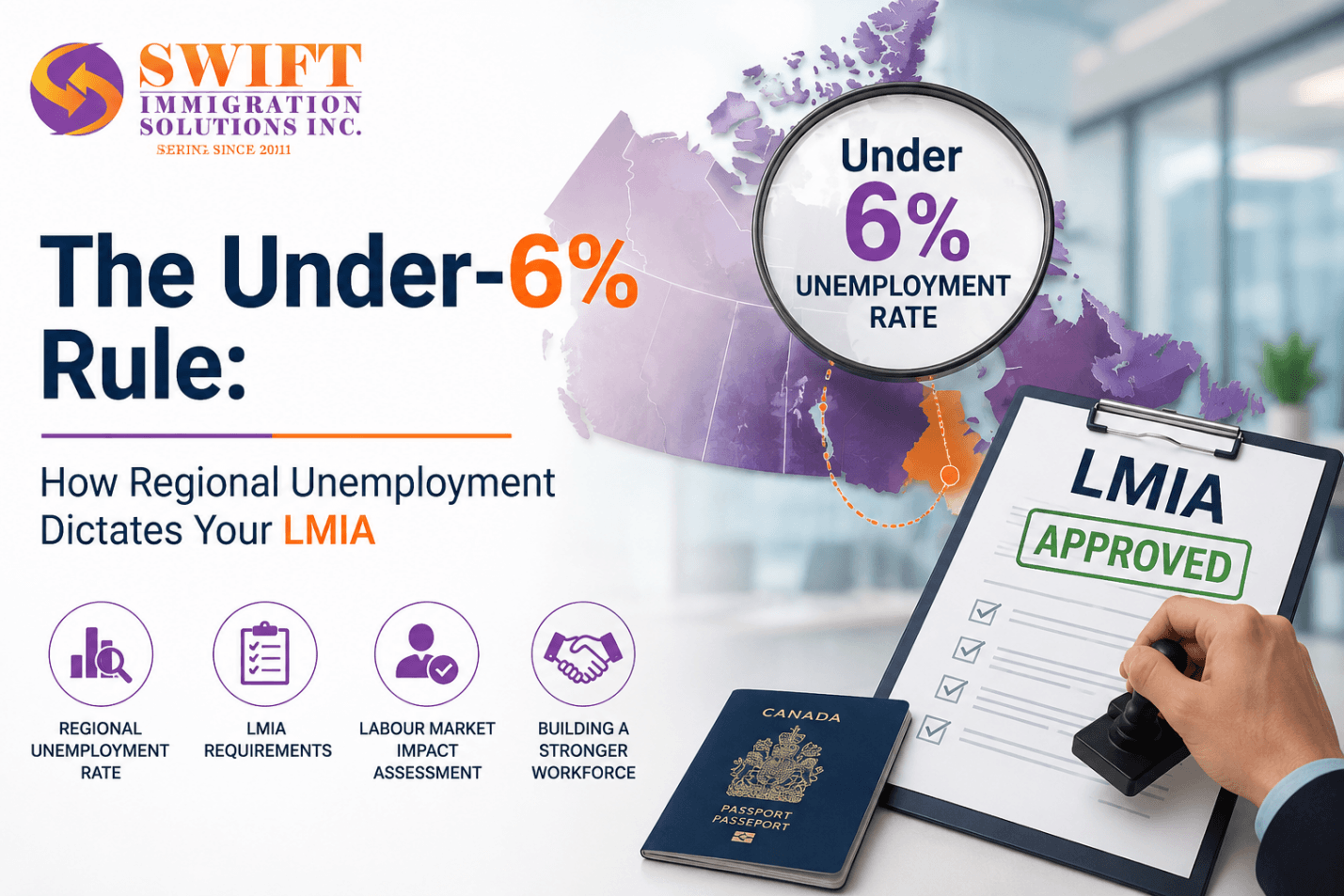
To protect local job markets, the federal government enforces a strict policy: it will refuse to process low-wage LMIA applications in any Census Metropolitan Area (CMA) where the unemployment rate is 6% or higher.
Because economic climates shift, the government recalculates these regional unemployment numbers every three months. The latest update has completely flipped the script for several major Canadian cities.
1. The Green Light: 8 Regions Reopened for Processing
Thanks to dipping unemployment rates, eight major regions have officially been removed from the processing freeze. If your business operates in one of these areas, you can once again apply for low-wage LMIAs:
- The Prairies:Winnipeg, Manitoba (down to 5.6%) and Regina, Saskatchewan (down to 5.9%).
- Atlantic Canada:Halifax, Nova Scotia (5.9%), Saint John, New Brunswick (5.9%), and Fredericton, New Brunswick (5.3%).
- Ontario:Kingston (5.3%) and St. Catharines-Niagara (5.8%).
- Quebec:Drummondville (5.7%).
2. The Red Light: New Regions Frozen Until October
Conversely, four regions saw their unemployment numbers spike past the 6% threshold. Low-wage LMIA processing in these cities is completely halted until at least October 9, 2026:
- Saskatoon, Saskatchewan(jumped from 5.5% to 6.5%)
- Red Deer, Alberta(jumped from 5.9% to 7.2%)
- Kamloops, British Columbia(jumped from 5.2% to 7.0%)
- Chilliwack, British Columbia(jumped from 5.7% to 7.9%)
Important Note: Major hubs like Toronto (7.3%), Vancouver (6.7%), Montreal (6.8%), and Calgary (7.0%) remain firmly on the frozen list. If your city isn’t listed among the lucky eight that dropped below 6%, processing remains paused.
Strategic Workarounds: What to Do If Your Region Is Frozen
If you are an employer facing a critical labor shortage—or a temporary worker whose permit is rapidly expiring in an affected zone—you aren’t entirely out of options. There are three primary strategic paths to bypass this freeze:
Path A: Pivot to the High-Wage Stream
The processing freeze only applies to the low-wage stream. If an employer increases the offered wage to meet or exceed the provincial hourly threshold, the application instantly upgrades to the High-Wage Stream, which is entirely exempt from regional unemployment freezes.
Keep in mind that new, higher provincial wage thresholds take effect for all LMIAs received from July 17, 2026, onward:
| Province | Hourly High-Wage Threshold (Effective July 17, 2026) |
| Alberta | $37.50 / hr |
| British Columbia | $38.40 / hr |
| Ontario | $36.92 / hr |
| Saskatchewan | $34.62 / hr |
| Nova Scotia | $31.96 / hr |
| Manitoba | $31.33 / hr |
Path B: Check for Industry Exemptions
Even in a frozen city with high unemployment, the government still processes low-wage LMIAs for critical sectors. If the job position falls under one of these essential categories, the freeze does not apply:
- Primary agriculture and food manufacturing
- Construction
- Hospitals, nursing homes, and residential care facilities
- Specific in-home caregivers
- Applications supporting Permanent Residency only (no work permit request)
Path C: Leverage Rural Community Programs
Under a temporary public policy, the government has eased restrictions for rural communities operating outside major CMAs. Eligible employers in these participating rural zones are permitted to employ low-wage foreign workers for up to 15% of their total workforce, rather than the standard 10% cap.
A Crucial Warning for Expiring Work Permits
If you are currently working in Canada under a low-wage LMIA work permit that is about to expire, and your region is now frozen, you must act quickly. You must stop working the exact day your authorization expires.
To maintain legal status inside Canada without accumulating un-authorized presence, you should submit an application to change your status to a visitor (Visitor Record) before your current work permit lapses.
Conclusion: Take Control of Your Strategy
Canada’s immigration and labor policies are moving incredibly fast. A single quarterly update can completely disrupt a hiring timeline or an extension plan. By verifying your regional data upfront, understanding your sector’s exemptions, or adjusting wage brackets strategically, you can safely navigate these freezes without risking costly application refusals.
Whenever you are dealing with complex corporate streams, LMFP changes, or expiring permits, navigating the paperwork carefully ensures your business stays staffed and your workforce stays fully compliant. For expert guidance and tailored assistance with all immigration needs, visit Swift Immigration to keep your applications on the right track.